Veranstaltungsübersicht

Hier finden Sie eine Übersicht über alle wissenschaftliche Seminare, Kolloquien und Vorträge am Max-Planck-Institut für Chemie oder benachbarter Einrichtungen.

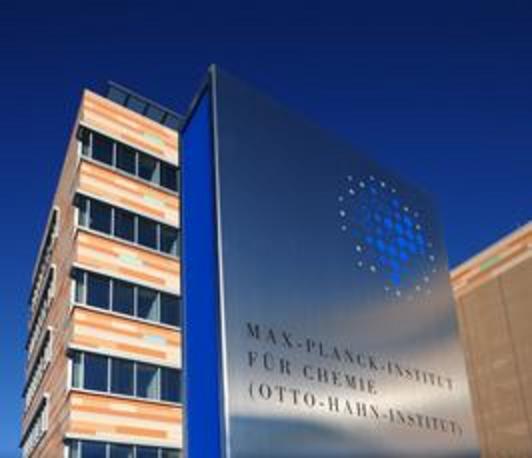
Gebädue des MPI für Chemie vor stahlend blauem Himmel sowie Anzeigetafel, Aluminium mit schriftzug Max-Planck-Institut für Chemie (Otto-Hahn-Institut)

Girls'Day: Erdsystemforschung am Max-Planck-Institut für Chemie

  • Datum: 23.04.2026
  • Uhrzeit: 09:45 - 15:00
  • Ort: Max Planck Institute for Chemistry
  • Raum: Seminar rooms 2/3
  • Gastgeber: T. Raber
  • Rubrik: Schüler-Labor
Ohne Luft könnten wir nicht leben. Aber aus was besteht Luft und was machen die einzelnen Bestandteile? Wir werfen einen genaueren Blick auf die Atmosphäre und klären, wie sie aufgebaut ist und wieso auch kleinste Bestandteile eine große Auswirkung haben können. Was hat es zum Beispiel mit den Treibhausgasen auf sich und was bewirken sie? Dazu erwarten euch Demonstrationen und kleine Versuche. Da unsere großen wissenschaftlichen Experimente fast alle selbst entworfen und konstruiert sind, fangen wir mit einem Besuch in unserer feinmechanischen Werkstatt an, bei dem ihr auch selbst Hand anlegen dürft. Ablauf des Kurses: Kurzer Einführungsvortrag, Labor- und Werkstattbesuch, Experimente mit Treibhausgasen. Wer: Für Mädchen der Klassen 9 und 10 (Mindestalter für die Teilnahme 14 Jahre). [mehr]
MPIC Gebäude vor strahlend blauem Himmel, Anzeigetafel Aluminium mit Schriftzug Max-Planck-Institut für Chemie (Otto-Hahn-Institut)

Which Mechanisms Control Air-Sea Gas Exchange? New Insights from Wind-Wave Facility Experiments

Institute Seminar
  • Datum: 29.04.2026
  • Uhrzeit: 14:15 - 15:30
  • Vortragende(r): Prof. Bernd Jähne
  • Interdisciplinary Center for Scientific Computing (IWR) and Institut für Umweltphysik (IUP), Heidelberg University
  • Ort: Max Planck Institute for Chemistry
  • Raum: Seminar rooms 2/3
  • Gastgeber: Prof. Jonathan Williams
  • Rubrik: Gesprächs- und Diskussionsformate, Vorträge
It is very difficult to disentangle the mechanisms of air-sea gas exchange with field experiments because all available measurement techniques provide insufficient spatial and temporal resolution and do not provide direct insight into the processes occurring in the thin mass boundary layers at the water interface.This talk presents results from the annular wind-wave facility (Heidelberg Aeolotron), the Large Air-Sea Interaction Facility (LASIF) at the University of Marseille, the Kyoto High Wind Speed Facility, and the SUSTAIN facility at the Rosenstiel School of Marine and Atmospheric Science (RSMAS) at the University of Miami, obtained over the last decade. We used thermographic techniques and imaging concentration fields in the mass boundary layer together with classical mass balance techniques.Wind shear is the driving factor except for very small wind speeds, but the mechanisms change with wind speed. Although surfactants significantly alter the mechanisms, monolayers do not directly resist gas transfer. The role of bubbles is less significant than previously thought. [mehr]
Institutsgebäude MPIC

Two Decades of Fine- and Coarse-Mode Aerosol Impacts on Radiative Forcing in the Amazon

Institute Seminar
  • Datum: 11.05.2026
  • Uhrzeit: 14:15
  • Vortragende(r): Pedro Tavarez
  • Institute of Physics of the University of São Paulo (SP/Brazil)
  • Ort: Max Planck Institute for Chemistry
  • Raum: Seminar rooms 2/3
  • Gastgeber: Dr. Bruno Backes Meller
The Amazon rainforest offers a unique experimental framework to assess aerosol effects on the radiative balance, given the interplay between a low-concentration, biogenically dominated background state and episodic, high-concentration anthropogenic perturbations or Saharan dust and smoke plume intrusions within a spatiotemporally varied aerosol population. Whereas previous studies have characterized the seasonal dynamics of the optical properties of these particles, disentangling the radiative effects of different-sized aerosols remains challenging. Our study focused on distinguishing the contributions of fine- and coarse-mode aerosols to top-of-atmosphere (TOA) radiative forcing (RF) and on evaluating a comprehensive suite of aerosol optical properties across six AERONET sites in the Amazon over 2 decades (2000-2024). This was performed by assigning labels to each data point based on the daily average of fine- and coarse-mode aerosol optical depths (AODs), using thresholds to categorize aerosol conditions as “low” (below 25th percentile) or “high” (above 75th percentile), and then evaluating each kind of event. For every site, events of low fine-mode and low coarse-mode (LL), and low fine-mode and high coarse-mode (LH) conditions usually occur during the wet season and the transition from wet to dry season. Conversely, events of high fine-mode and low coarse-mode (HL) and high fine-mode and high coarse-mode (HH) conditions usually occur during the dry season. Across all sites, under low fine-mode conditions, the AOD shows a strong dependence on the coarse-mode, with increases of approximately 131% from LL to LH. However, under high fine-mode conditions, the AOD shows a weaker dependence on the coarse-mode, with increases of approximately 12% from HL to HH. Regarding TOA RF, sites in the deforestation arc show a weak dependence on coarse-mode under both low and high fine-mode conditions (RFLL = -3.15 W/m² to RFLH = -3.05 W/m² and RFHL = -31.3 W/m² to RFHH = -33.4 W/m²). In contrast, sites in the central-north region show a stronger dependence on coarse-mode (RFLL = -4.40 W/m² to RFLH = -11.1 W/m² and RFHL = -20.0 W/m² to RFHH = -29.1 W/m²). For a multilinear regression model in the form RF = cFM AODFM + cCM AODCM, where cFM and cCM are the RF efficiencies of fine- and coarse-mode per unit of their respective AODs, we obtained cFM = -25 W/m² and cCM = -95 W/m² for the deforestation arc sites, and cFM = -39 W/m² cCM = -66 W/m² for the central-north Amazon ones. In conclusion, we have shown that coarse-mode aerosols contribute significantly to all the optical properties analyzed, particularly by increasing AOD during low fine-mode conditions and by enhancing (in magnitude) radiative forcing at sites in the central-north Amazon. Moreover, as all RF efficiencies are negative, the predominant aerosol effect in the Amazon atmosphere is always cooling, and the coarse-mode efficiency is consistently greater than the fine-mode efficiency at all sites. [mehr]
Zur Redakteursansicht